
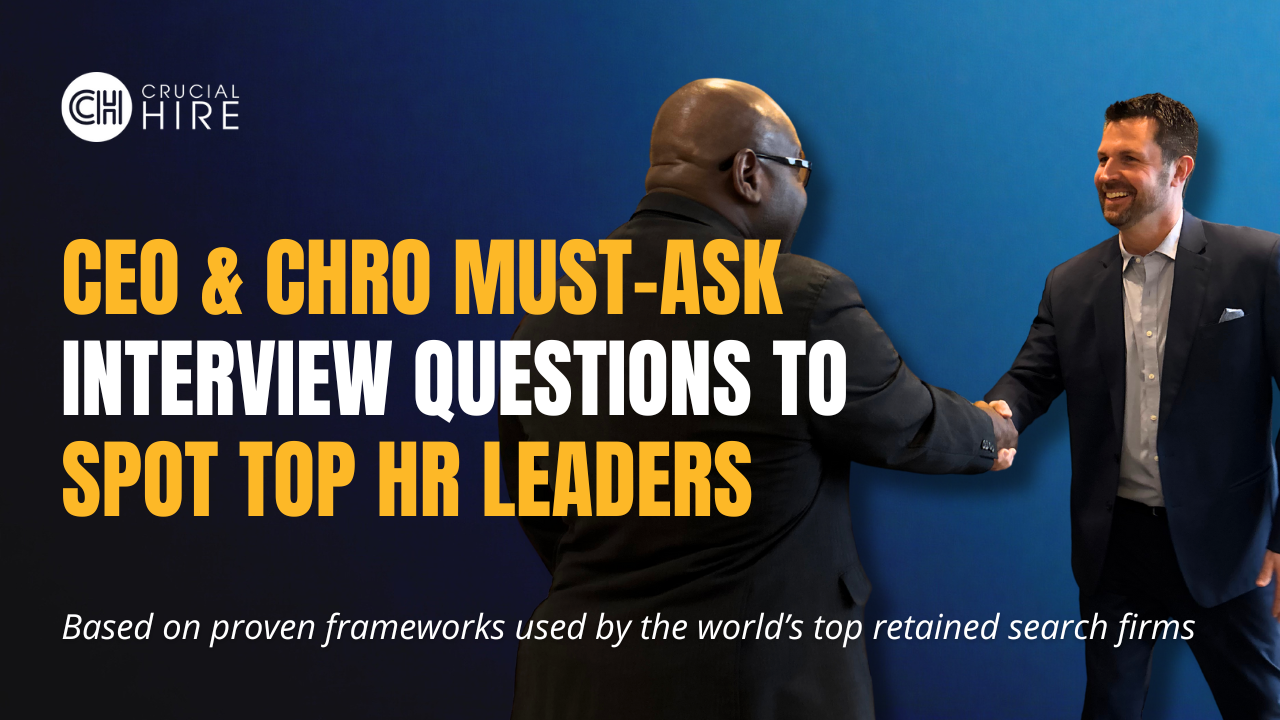
Why These Questions Matter
The first interview isn’t just a screen—it’s a signal.
It sets the tone for leadership, values, and impact.
These 10 questions are designed to reveal readiness, not just résumés.
They’re the starting line for momentum-driven hires.
🔟 The 10 Interview Questions
1️⃣ What’s Your Career Headline?
“If I could summarize what drives me, it’s…”
Why Ask It? Reveals purpose, self-awareness, and brand clarity.
Inspired by: Korn Ferry’s Executive Presence Index (EPI)
2️⃣ What Do You Want to Build With Us?
“What projects, outcomes, or culture would fire you up here?”
Why Ask It? Gets beyond job-seeking and into impact-seeking.
Inspired by: Heidrick & Struggles’ high-performer alignment model
3️⃣ When Have You Been at Your Best—and Why?
Look for the conditions, not just the accomplishment.
Why Ask It? Learn what motivates and sustains them.
Inspired by: Spencer Stuart’s “Fit-for-Future” criteria
4️⃣ What Are You Not Great At—Yet?
“What are you working on getting better at right now?”
Why Ask It? Shows coachability, growth mindset, and humility.
Used in: Coaching by Lee Hecht Harrison & BPI group
5️⃣ What’s a Win You’re Proud Of That’s Not on Your Résumé?
“What mattered to you—not just your last manager.”
Why Ask It? Uncovers values, EQ, and authentic achievement.
Popular in: C-suite searches at Egon Zehnder
6️⃣ How Do You Want to Grow Here?
“What would success look like 18 months into this role?”
Why Ask It? Reveals if they see this as a job—or a launchpad.
Recommended by: McKinsey’s talent framework
7️⃣ Who Taught You the Most—and What Did You Learn?
“Tell me about a mentor, coach, or critic who shaped you.”
Why Ask It? Unpacks how they receive feedback and build trust.
Common in: CEO succession assessments
8️⃣ When Have You Disagreed With Leadership—And How Did You Handle It?
“Tell me about a time you challenged the status quo.”
Why Ask It? Gauges political savvy, communication, and courage.
Used by: Russell Reynolds Associates to assess board readiness
9️⃣ What Should I Know About How You Work—Before You Start?
“How do you manage pressure, priorities, and pace?”
Why Ask It? Surfaces hidden expectations early.
Best Practice: Used by firms like Odgers Berndtson
🔟 What Are You Looking for in a Leader?
“Describe the kind of executive you thrive under.”
Why Ask It? Not about stroking egos—about chemistry and clarity.
Shared by: Gallup & SHRM
Interviews Aren’t Just a Screen—They’re a Signal
They communicate what your company values.
They reflect how you define leadership.
They shape what success looks like on Day One.
When you ask better questions, you do more than assess resumes—
you reveal readiness.
You test alignment.
You gauge altitude.
In a world where every company claims to want “top talent,”
the real differentiator is how you recognize it, attract it, and engage it—
from the first conversation.
This isn’t about trick questions or corporate theater.
It’s about showing up as a leader who knows what kind of leader you’re looking for.
Great candidates don’t want to be impressed.
They want to be understood.
“You’re not just hiring a résumé.
You’re hiring momentum.
Ask better questions—hire better leaders.”
— Zach Nold | Crucial Hire